
This unusual looking structure is an educational kiosk that will be used at science fairs to assist students in learning about the Sun and the planets in our solar system. It was designed by one Dr. Leonard who enlisted my woodshop and woodworking skills to help build the beast. In it’s finished form (not shown here), the kiosk is painted flat black with pictures of the planets along the curved sides and a computer monitor mounted in the middle. A large 10″ speaker attaches to the topmost slanted panel.
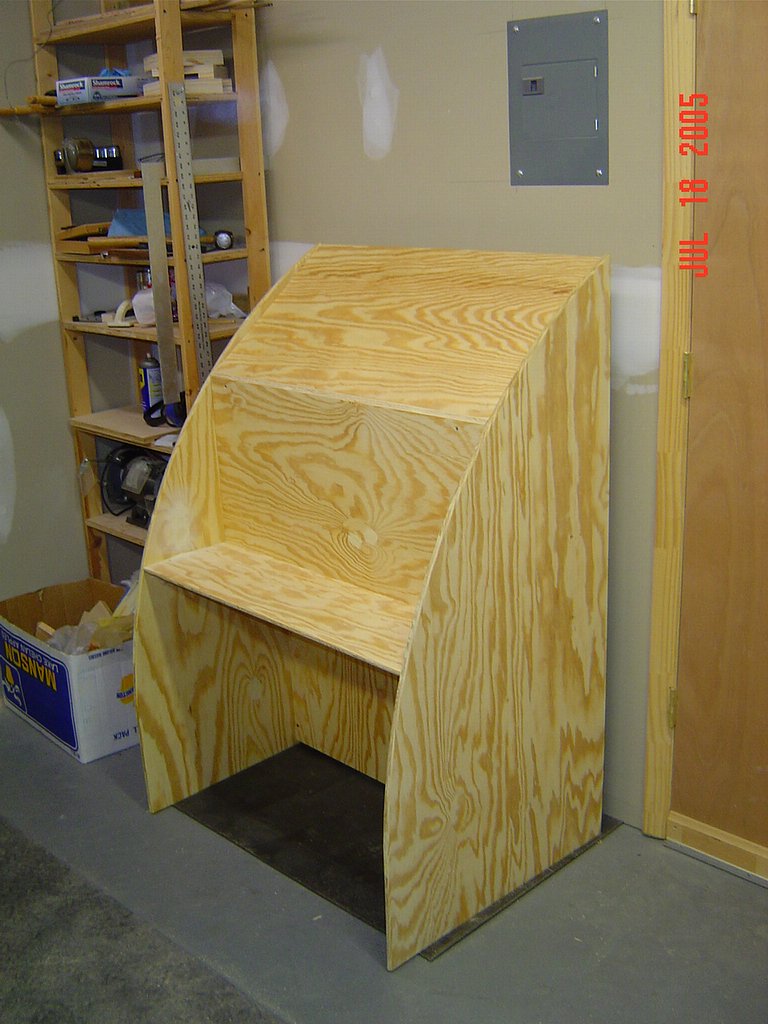
Science kiosk front view
The opening in the front of the kiosk is designed to accommodate a person in a wheel chair. Once the chair is in position, the monitor should be at a comfortable viewing position.
The kiosk was made from relatively inexpensive 5/8″ interior plywood with one good side and one so-so side. Nicer materials could certainly have been used but the idea is to eventually provide the kiosk plans to other educators so they can build it themselves — the more affordable the kiosk, the more likely they are to be able to build it. You know how school budgets are…
This interior view shows the rectangular cut-out for the monitor (basically a laptop computer mounted on a shelf). The hole on top is where a large bass speaker is mounted. Vibrations from the speaker enable deaf people to follow the presentation on the computer (the idea is for them to place their hands directly onto the speaker grill).
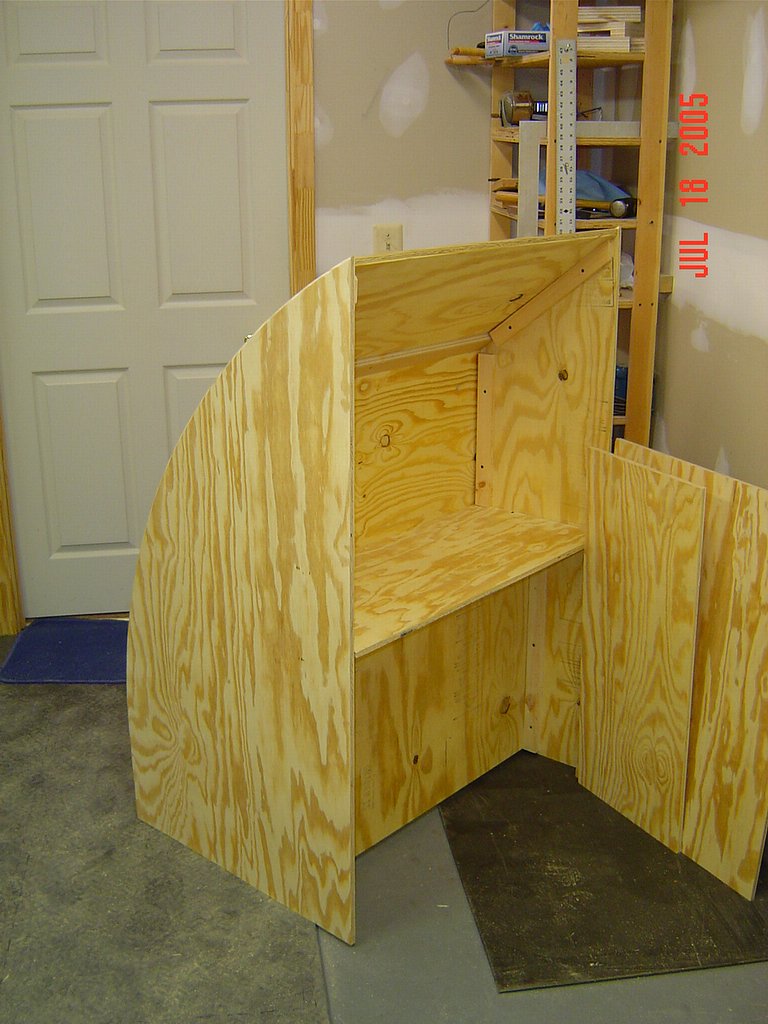
Science kiosk interior compartment
The joinery was pretty simplistic. 3/4″ pine “nailers” were screwed to the two curved side pieces and then the other pieces were screwed into the nailers. (remember: simple and cheap). The trickiest part was getting the proper angle cuts for the two front pieces so they would fit together without leaving a noticeable gap. Fortunately, we had sufficient PhD power in the woodshop to figure that one out without too much trouble. Here is a photo of the proud creators of the kiosk. That’s me to the left, Dr. Leonard in the middle, and Dr. Bill to the right.
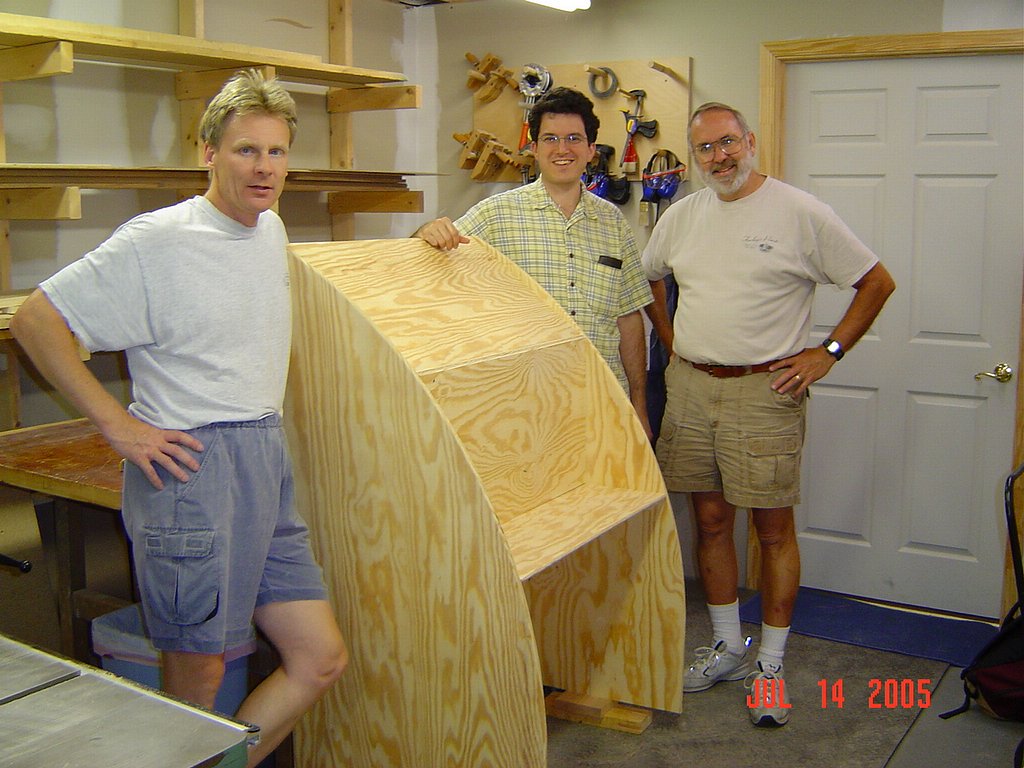
The proud kiosk builders
Four casters were mounted on the bottom of the kiosk to enable rolling it around. Lightweight, inexpensive, and mobile – that was the mantra. In fact, a key part of the design was that the kiosk had to be small enough to fit into the back of Leonard’s station wagon and light enough for one person to load and unload it.
Here are the edges of the curved side pieces being rounded with a 1/4″ rounding bit. The curves were laid out using a makeshift compass and then cut using a saber saw. The belt sander was used to smooth out the cut edge. There were some voids in the plywood and chip-out from routing but those issues were easily resolved with a little wood putty.
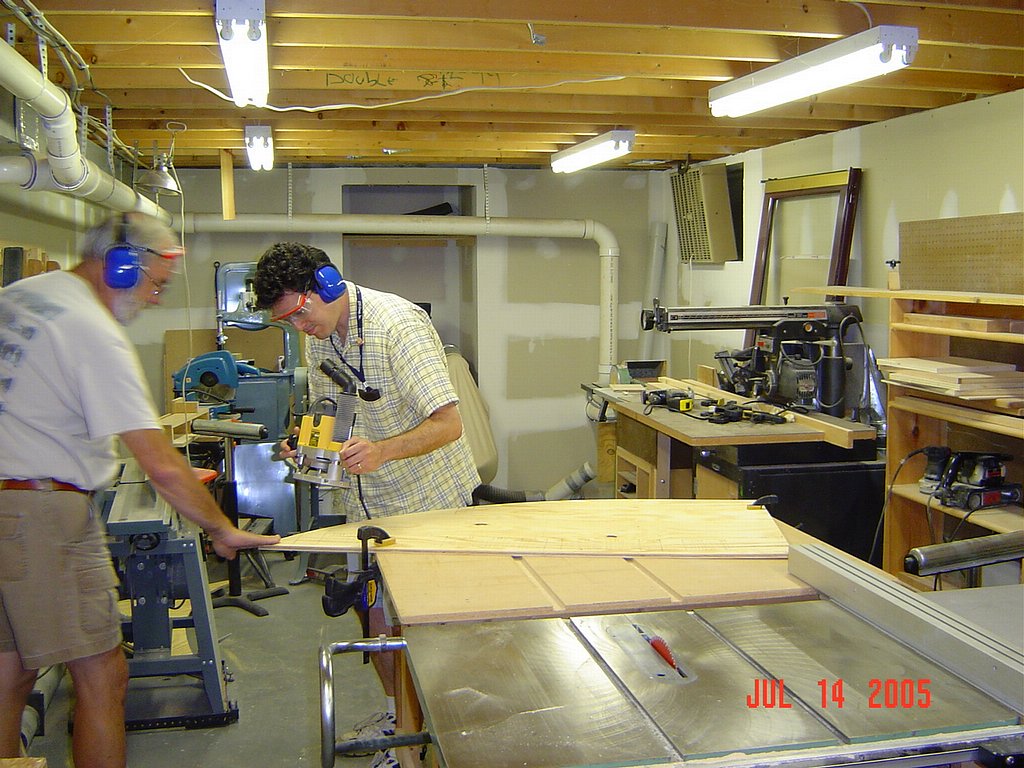
Rounding edges of curved sides
The backside view of the kiosk shows the interior compartment that will house the computer, speaker, and supporting electronic components. For security, a lockable door was mounted in the back. It attaches to hinges located near the shelf and swings upward into its closed position. The door also provided a little extra side-to-side structural rigidity.
Science kiosk interior compartment